
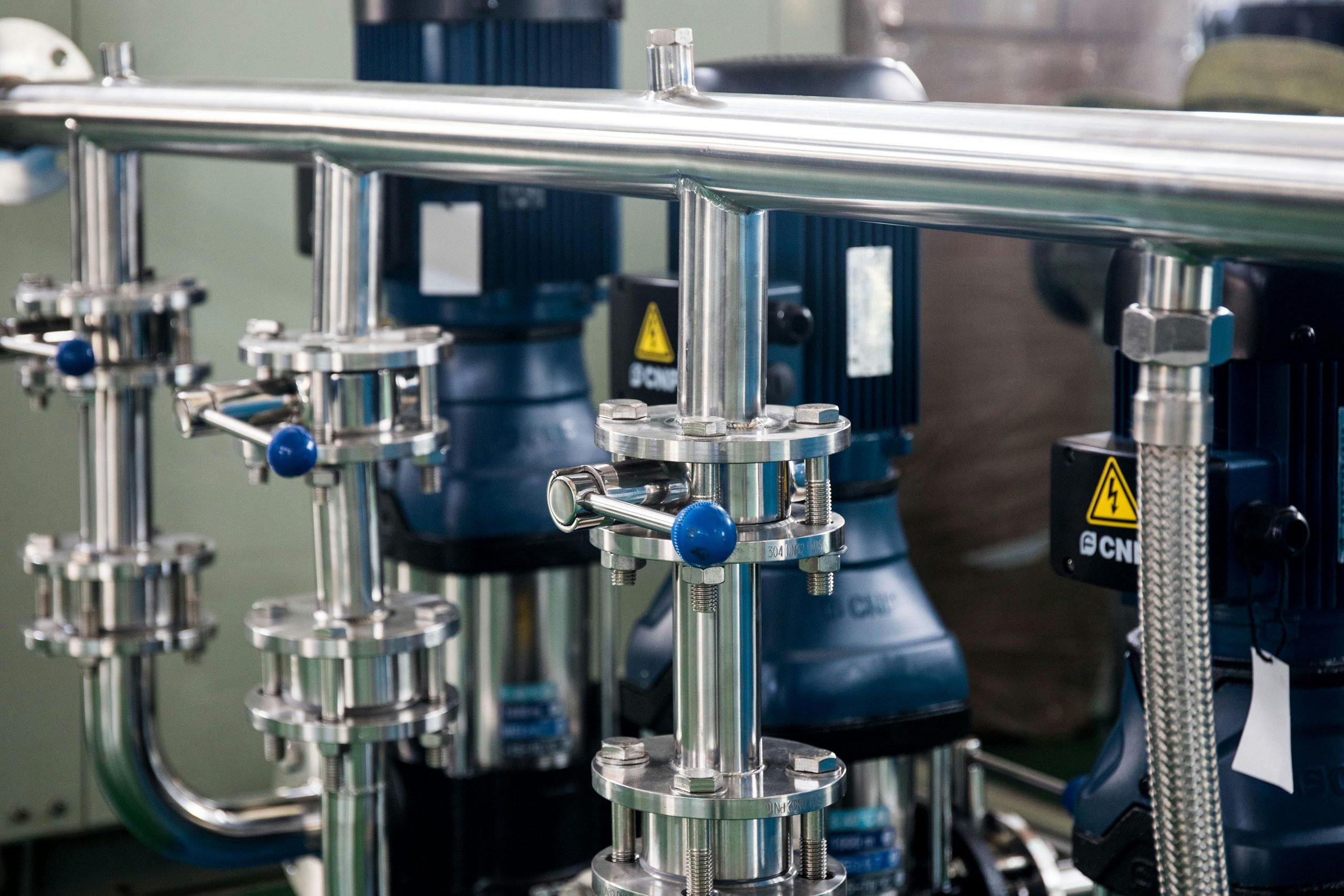
In the core production process of bioengineering and food fermentation industry, the level of hygienic design of fermentation tanks is directly related to the final quality of the product, the production safety system and the overall economic efficiency. With the GMP Good Manufacturing Practice and HACCP Hazard Analysis Critical Control Point system in the relevant industries in-depth implementation and strict enforcement, modern fermenter hygiene design has evolved from the simple basic requirements of equipment cleaning, involving materials science, fluid mechanics, microbial control and automation technology of a comprehensive system of disciplines. The current fermenter design not only needs to meet the increasingly stringent health standards, but also needs to take into account the precision of process control, energy efficiency indicators and ease of operation and other multiple needs, and has become a key equipment to promote technological progress in the field of biomanufacturing as a whole.
The hygienic design of fermentation tanks begins with material selection, and austenitic stainless steel is the industry's first choice for its excellent corrosion resistance, non-toxicity and surface finish. Among them, 316L stainless steel with lower carbon content (≤ 0.03%) and molybdenum added (2-3%), in the resistance to chloride corrosion and pitting corrosion outstanding performance, especially for chloride-containing media fermentation environment. Material surface treatment process directly affects the microbial attachment and cleaning efficiency, electrolytic polishing technology can control the surface roughness Ra value below 0.8μm, much lower than the mechanical polishing of 1.6μm standard, significantly reducing the probability of bacterial biofilm formation. The smooth transition design of the inner wall weld adopts automatic argon arc welding with endoscopic inspection to ensure that the residual height of the weld is no more than 0.5mm, avoiding the formation of cleaning dead ends.
The design of the tank structure should follow the three principles of "no dead space, self-emptying and easy cleaning". Butterfly or elliptical heads are used at the bottom of the tank, with a minimum tilt angle of 2°, to ensure that the culture medium and cleaning solution can be completely emptied. Mixing systems are designed to balance mixing efficiency with hygiene risks. Overhead mechanical seals prevent microbial ingress more effectively than packing seals, and sealing chambers are designed with vapor barriers and condensate drains for aseptic sealing. The number of baffles is usually 4-6, with a width of 1/10-1/12 of the tank diameter, installed with a gap of 1-2 times the baffle thickness of the tank wall, forming a turbulent area to promote mass transfer while avoiding solids deposition.
The hygienic design of the temperature control system has a direct impact on the stability of the fermentation process and the level of energy consumption. The jacket design needs to consider the heat transfer efficiency and cleaning convenience, half-pipe jacket compared with the traditional full jacket to reduce the cooling area requirements of 30%, while reducing the risk of cleaning fluid residue. The temperature sensor uses sanitary sleeve design, insertion depth of 1/3-1/2 of the tank diameter, response time of less than 30 seconds to ensure real-time temperature control and accuracy. For large fermentation tanks (volume ≥ 50m³), the multi-zone temperature control strategy divides the tank into upper, middle and lower three temperature control zones, independently adjusts the cooling water flow in each zone, and controls the axial temperature gradient within ± 0.5℃.
The integration of online monitoring system is the core feature of modern fermenter. pH electrode adopts retractable hygienic type installation, with measurement accuracy of ±0.02pH and response time less than 30 seconds. The dissolved oxygen electrode is based on the fluorescence quenching principle, avoiding the membrane contamination and frequent calibration problems of traditional electrodes, with a measurement range of 0-200% air saturation and an accuracy of ±1%. The tail gas analysis system monitors the rate of O₂ consumption and CO₂ generation in real time by mass spectrometry or infrared technology, with a data acquisition frequency of up to 1 Hz, providing high temporal resolution data for metabolic flow analysis. The sensors feature hygienic process connections, meet 3A or EHEDG certification standards, and support in-situ cleaning and sterilization.
The design of the cleaning-in-place (CIP) system needs to consider the synergistic effect of hydrodynamics and chemical cleaning. Cleaning fluid flow rate should be maintained at 1.5-2.0m/s, Reynolds number greater than 10000, to ensure turbulent cleaning effect. Rotating shower ball coverage angle of 360 °, spray pressure 0.3-0.5MPa, per square meter of surface area of the cleaning fluid flow rate of not less than 40L/min. Cleaning procedures usually include pre-rinse, alkaline wash, intermediate rinse, acid rinse and the final rinse of the five phases of the total time control in the 90-120 minutes, the temperature gradient from ambient to 80-85 ° C gradually increased. Sterilization in place (SIP) is performed using saturated steam at 121°C for 30 minutes to ensure that the Fo value (sterilizable lethal value) is greater than 15, and a bio-indicator challenge test is performed to verify 6-log microbial kill.
The process control strategy evolved from traditional PID control to model predictive control (MPC) with artificial intelligence optimization. The dynamic replenishment strategy based on metabolic flux analysis adjusts the replenishment rate based on real-time OUR (oxygen uptake rate) and CER (carbon dioxide release rate) data, controlling specific growth rate fluctuations within ±5%. Multivariate Statistical Process Control (MSPC) monitors 20-30 process variables simultaneously, detects process abnormalities in real time through T² and Q statistics, and delivers early warning time 2-3 hours earlier than traditional univariate control. Digital twin technology establishes a physical-data hybrid model of the fermentation process and conducts process optimization tests in virtual space, shortening the process development cycle of new products by more than 40%.
The hygienic design of fermenters has evolved from a single equipment requirement to a complete technical system covering materials, structures, control and cleaning. The future development trend will focus on intelligent surface treatment technology, nano-coated antimicrobial materials, adaptive control strategies based on machine learning, and the in-depth application of modular design concepts. With the rapid development of synthetic biology and cell factory technology, higher requirements are put forward for the process control precision, sterility level and multi-product adaptability of fermenters, which drives fermentation equipment to evolve in the direction of higher hygiene level, stronger intelligent features and better energy efficiency performance. Technology research and development should focus on interdisciplinary integration, and systematically integrate the results of material science, fluid simulation, microbiology and data science to provide solid technical equipment support for the upgrading of the biomanufacturing industry.
 简体中文
简体中文  English