
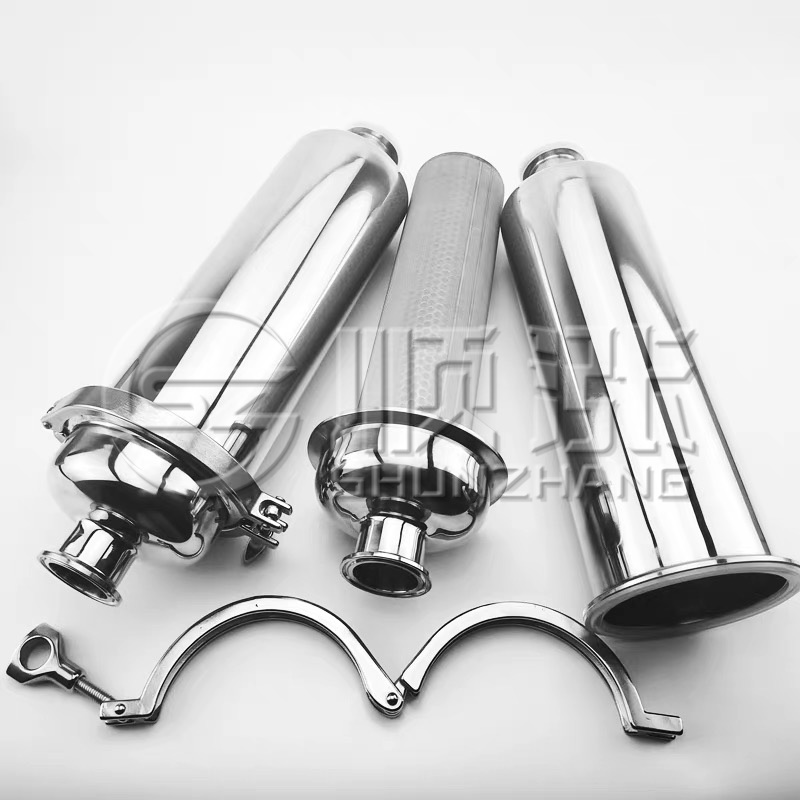
Pipeline filter-as the key protection equipment in the chemical fluid transportation system, its performance directly affects the stability and safety of the entire production process. In the chemical production process, raw materials, intermediate products and finished products often need to be transported over long distances through pipelines, which will inevitably be mixed with a variety of solid impurities, such as pipeline corrosion products, sealing material debris, environmental pollutants, etc. These impurities may not only clog valves, pumps and instruments, but also affect product quality and even lead to equipment damage. These impurities may not only clog valves, pumps and instruments, but also affect product quality, and even lead to equipment damage and production interruption. Pipeline filters can effectively intercept these solid particles by installing them at appropriate locations in the pipeline, protecting downstream equipment from damage and ensuring the continuous and stable operation of the production process. With the continuous complication of chemical processes and the increasing requirements for product quality, the technical level and application scope of pipeline filters are continuously expanding, and they have become an indispensable and important equipment in modern chemical production.
The basic working principle of pipeline filter is to physically intercept the fluid through the screen or cartridge, and its filtration accuracy is usually selected according to the process requirements, ranging from tens of microns to several millimeters. Compared with bag filters and core filters, pipeline filters are more focused on providing continuous protection during fluid transportation, and their structural design needs to fully consider the pressure, flow rate and media characteristics of the pipeline system. Common pipeline filters include Y-type filters, T-type filters, basket filters and other forms, each of which has its own specific application scenarios and technical characteristics.Y-type filters have a compact structure and are suitable for installation in space-limited locations, and their screens are usually made of stainless steel, which are able to withstand higher pressures and temperatures.T-type filters have a larger filtration area and dirt-holding capacity, and are suitable for working conditions with higher levels of impurities. Its unique structural design facilitates the cleaning and replacement of the filter screen. The basket filter combines high dirt-holding capacity and good flow characteristics, and is widely used in large pipeline systems.
The choice of filter material has a decisive influence on the performance and service life of pipeline filters.Stainless steel screen is the most commonly used filter material, which has good mechanical strength, corrosion resistance and high temperature resistance propertiesIt can be adapted to the working environment of most chemical media. According to the different filtration precision, the weaving of stainless steel screen can be divided into plain weave, twill weave and mat weave, etc. Each weaving method has its own specific filtration characteristics and strength performance. For special working conditions, such as high temperature and high pressure environment or strong corrosive media, you can also choose to use Hastelloy, titanium alloy and other special materials manufactured screen. The shape and size distribution of the openings in the screen directly affects the filtration effect and pressure drop characteristics, a reasonable design of the openings to ensure filtration accuracy at the same time, minimize the fluid resistance and extend the cleaning cycle. In recent years, with the development of material science, some new filter materials such as ceramic screens, polymer composite screens, etc. have also begun to be used in pipeline filters, and these materials have shown excellent performance in some specific working conditions.
The structural design of pipeline filters requires comprehensive consideration of various factors such as fluid mechanics, material mechanics and process requirements. As the main pressure-bearing component of pipeline filter, the housingThe design must meet the requirements of the relevant pressure vessel standards.The material of the casing is a steel or stainless steel, which ensures safety at the maximum working pressure. Common housing materials include carbon steel, stainless steel and alloy steel, etc., which are selected according to the media characteristics and working conditions. The inlet and outlet connections need to be matched with the piping system, and flange connection is the most common form, whose sealing performance and ease of installation directly affect the use of the filter. The design of the filter support structure should not only ensure the stability of the filter, but also avoid excessive resistance to the fluid, and at the same time, it should also facilitate the disassembly and cleaning of the filter. For pipeline filters that require online cleaning, it is also necessary to design the corresponding backwashing system to remove the impurities on the screen by changing the direction of the fluid or using cleaning media to realize non-stop cleaning and improve production efficiency. The design of duplex filters, on the other hand, realizes the mode of one-use and one-standby or simultaneous work by connecting two sets of filtration units in parallel to ensure that normal production is not affected when cleaning or replacing the filter mesh.
The choice of installation location is crucial to the working effect of pipeline filter. Installing pipeline filters at the inlet of the pump can effectively protect the pump body from damage caused by solid particles and extend the service life of the pump. Installing filters at the front end of flow meters, control valves and other precision instruments can prevent impurities from clogging the instruments and ensure the accuracy of measurement and control. Installing filters at the front end of heat exchangers, reactors and other key equipment can avoid impurities from being deposited inside the equipment and affecting the heat transfer efficiency or reaction effect. For long-distance transportation pipelines, it is also necessary to consider installing multiple filters at appropriate locations to form a graded filtration system to gradually remove impurities of different particle sizes and reduce the burden of a single filter. When installing, it is also necessary to pay attention to the flow direction of the fluid to ensure that the filter is installed in the design direction, to avoid reverse installation leading to a decline in filtration effect or equipment damage. Pipe support and stress analysis are also important factors to be considered in the installation process, especially in high temperature or vibration conditions, appropriate support measures need to be taken to prevent the filter from being damaged due to pipe stress.
Operation and maintenance is the key link to ensure the long-term stable operation of pipeline filters. Regularly checking the change in the pressure drop of the filter is an important basis for judging the degree of clogging of the filter, and when the pressure drop exceeds the design value, the filter needs to be cleaned or replaced in a timely manner. Cleaning methods need to be selected according to the structure of the filter and the characteristics of impurities, and common cleaning methods include reverse flushing, ultrasonic cleaning and chemical cleaning. Reverse flushing flushes away the impurities on the screen by changing the direction of the fluid, which is suitable for impurities that are not strongly adherent. Ultrasonic cleaning uses high-frequency vibration to dislodge impurities from the screen, and is suitable for precision screen cleaning. Chemical cleaning uses appropriate cleaning agents to dissolve or soften impurities, applicable to oil or organic contamination. The cleaned screen needs to be checked for integrity to ensure that there is no breakage or deformation, and if necessary, a pressure test or bubble point test is carried out to verify that the filtration performance is restored. For serious clogging or damage to the screen that can not be cleaned, it needs to be replaced in a timely manner, and when replacing it, attention should be paid to selecting spare parts with the same specifications and materials as the original screen to ensure consistency of filtration performance. The establishment of perfect maintenance records, including cleaning time, pressure drop data, replacement parts and other information, helps to analyze the operation of the filter and optimize the maintenance cycle.
As an important part of the chemical fluid transportation system, the technical level and application effect of pipeline filters are directly related to the safety and economy of the production process. With the continuous development of new materials, new processes and intelligent technology, pipeline filters will continue to improve in terms of filtration precision, service life, maintenance convenience and intelligentization level, providing more reliable and efficient filtration solutions for chemical production. Future.With the increasing demands for productivity and environmental protectionThe technological innovation of pipeline filters will pay more attention to energy saving and consumption reduction, resource recycling and intelligent management, and make greater contribution to the sustainable development of the chemical industry.
 简体中文
简体中文  English