
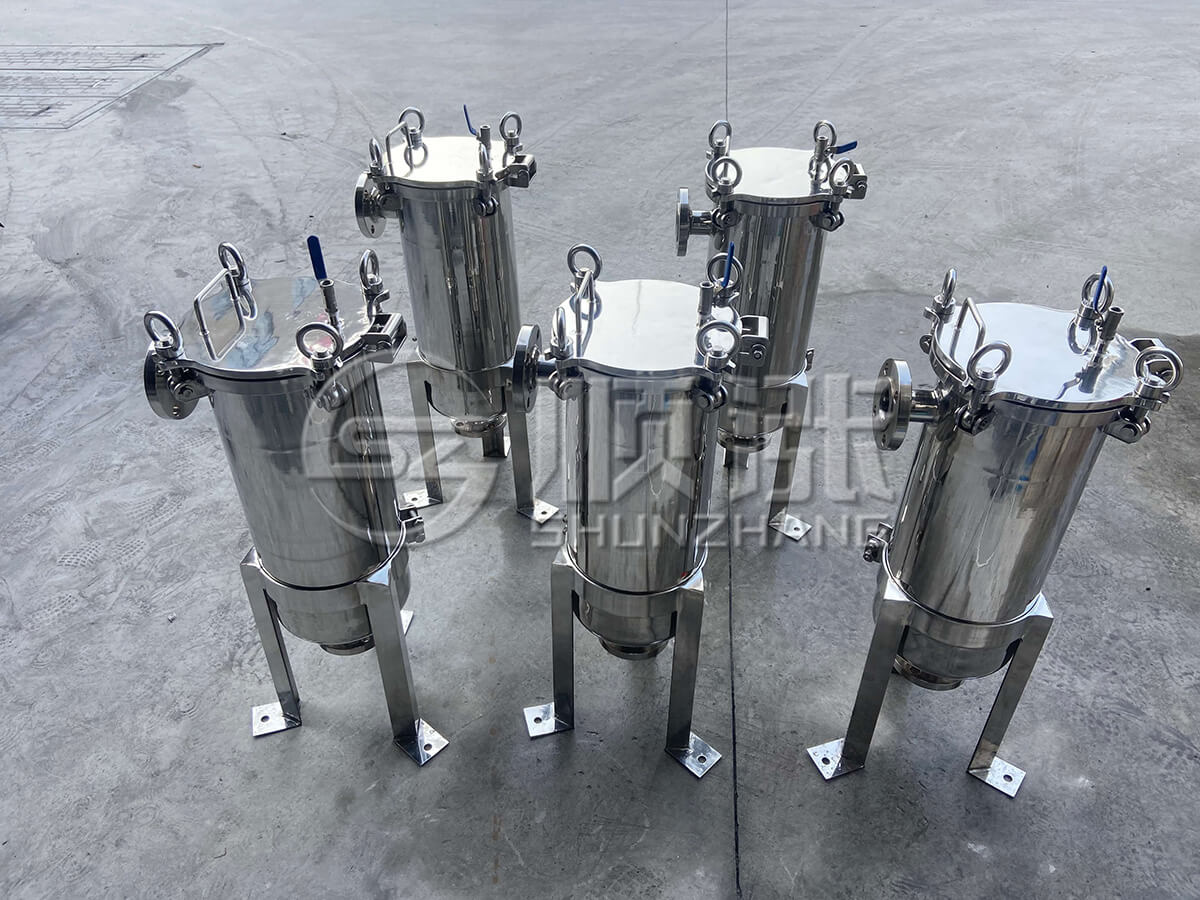
As an important solid-liquid separation equipment in chemical production, the filtration precision of bag filter directly affects product quality, process efficiency and equipment operation stability. In the chemical production process, raw materials and intermediate products often contain different degrees of solid impurities, which not only affect product quality, but also may cause damage to downstream equipment. Bag filters filter the fluid through the filter bag, which can effectively remove solid particles and protect the stable operation of subsequent equipment and processes. As the core technical parameter of bag filter, the filtration accuracy and its control level are directly related to the filtration effect and equipment performance. In this paper, we will systematically analyze the application characteristics and technical requirements of bag filters in the chemical industry from the aspects of filtration principle, precision control technology and influencing factors.
The definition and control of filtration accuracy is a core element of bag filter technology. Filtration precision usually refers to the smallest particle size that can be effectively intercepted by the filter, and is identified in microns. In practice, the filtration precision not only depends on the aperture size of the filter bag, but also relates to a variety of factors such as filter materials, filtration methods, operating conditions, etc. The filtration process of bag filter can be divided into surface filtration and deep filtration. The filtration process of bag filter can be divided into two mechanisms: surface filtration and deep filtration. Surface filtration mainly relies on the microscopic pores on the surface of the filter bag to intercept the particles, while deep filtration utilizes the fiber structure inside the filter material to capture the particles. These two filtration mechanisms have their own advantages under different precision requirements, and need to be selected according to specific process conditions.
The choice of filter bag material has a significant impact on filtration accuracy. Common filter bag materials include polypropylene, polyester, nylon, PTFE and other synthetic fiber materials, as well as stainless steel, ceramics and other inorganic materials. Different materials have different physical and chemical properties, polypropylene has good chemical stability and corrosion resistance, suitable for most chemical media; polyester fiber high strength, wear resistance, suitable for high flow rate conditions; polytetrafluoroethylene has excellent corrosion resistance and high temperature resistance, suitable for strong acid and alkali environment. Material selection needs to consider the chemical nature of the filtration medium, temperature range, pressure conditions and other factors to ensure that the filter bag to maintain stable filtration performance in the process of use.
The design of the filtration system plays a key role in accuracy control. The structural design of bag filter includes the shell, filter bag support network, inlet and outlet distributor, sewage device and other parts. Reasonable structural design can ensure the uniform distribution of fluid, avoiding the local flow rate is too high, resulting in filter bag breakage or filtration precision decline. The design of the inlet and outlet distributor needs to take into account the characteristics of fluid dynamics, reduce turbulence and dead space, and improve filtration efficiency. The design of the drainage system should be able to remove the retained solid particles in a timely manner to prevent clogging of the filter bag and elevated differential pressure. In addition, parameters such as the installation position of the filter, the piping connection method, and the operating pressure all affect the stability of the filtration accuracy.
The influence of operating conditions on filtration precision should not be ignored. Flow rate is an important parameter affecting filtration precision, too high a flow rate will cause particles to penetrate the filter bag and reduce filtration precision; too low a flow rate will affect production efficiency. Usually, the recommended flow rate of bag filter ranges from 0.5-2.0 meters/minute, and the specific value needs to be determined according to the characteristics of the filtration medium and process requirements. The operating temperature affects the physical properties of the filter bag material, and high temperature may lead to softening, shrinkage or deformation of the filter bag material, thus changing the filtration precision. The operating pressure directly affects the filtration driving force, too high a pressure may destroy the structure of the filter bag, too low a pressure affects the filtration efficiency. In actual operation, these parameters need to be reasonably set according to the process conditions to ensure the stability of filtration precision.
Testing and verification of filtration accuracy is an important part of ensuring equipment performance. Commonly used testing methods include bubble point test, diffusion flow test, integrity test and so on. The bubble point test evaluates the maximum pore size by measuring the minimum pressure required for the gas to break through the filter bag (see test method standards for details).National Filtration and Separation Standardization Technical Committee); the diffusion flow test evaluates filtration performance by measuring the diffusion flow of gas through a wetted filter bag; and the integrity test verifies filtration effectiveness by detecting changes in particle concentration before and after filtration. Each of these testing methods has its own characteristics and needs to be selected and used on a case-by-case basis. Regular testing of filtration accuracy can detect changes in filter bag performance and take appropriate measures to ensure filtration effectiveness.
In the application practice of the chemical industry, the precision control of bag filter needs to be optimized according to the specific process requirements. In fine chemical production, the purity of raw materials requires high precision filtration; in the process of wastewater treatment, the main concern is the solid removal rate, and the precision requirements are relatively low; in the application of catalyst recovery, it is necessary to ensure the filtration precision, but also to consider the strippability of the filter cake. Different application scenarios have different requirements for filtration precision, which need to be combined with the actual process conditions for technology selection and parameter optimization. In addition, the application of automation control, online monitoring, remote diagnosis and other technologies of the filtration system can further improve the reliability and efficiency of filtration precision control.
With the continuous development of chemical technology, bag filter technology is also constantly innovating and progressing. The development of new filter materials has improved the filtration precision and corrosion resistance (refer to theEngineering and Technology Committee of the Chinese Society of Chemical Engineers(relevant technical standards); the application of intelligent control system realizes the precise control of the filtration process; online monitoring technology can grasp the filtration status and accuracy changes in real time. These technological advances provide more reliable and efficient filtration solutions for chemical production. In the future, with the development of intelligent manufacturing and industrial Internet technology, bag filter will develop in the direction of more intelligent, integrated and efficient, providing strong support for the transformation and upgrading of the chemical industry.
 简体中文
简体中文  English